
Warning Signs Your Water Heater Needs to Be Replaced
Introduction
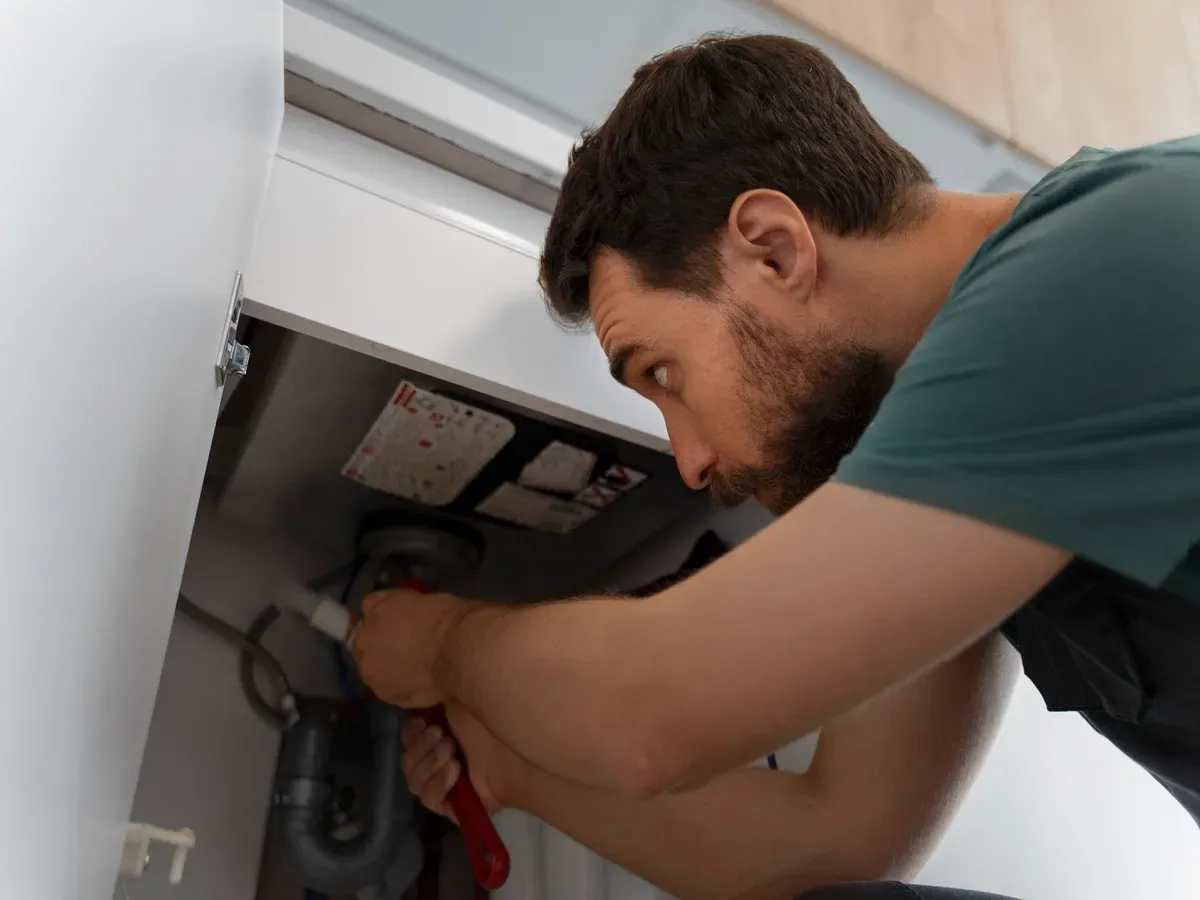
Is your morning shower going cold faster than it used to? That could be one of the first warning signs your water heater needs to be replaced — and catching it early can save you from a flooded utility room or a miserable week without hot water.
Most tank water heaters last between 8 and 12 years. If yours is getting close to that range and you are starting to notice problems, you may already be past the point where a repair makes sense.
This guide walks you through the clearest warning signs your water heater needs to be replaced so you can make a smart decision fast. We will cover the top symptoms to watch for, explain when replacement beats repair, and show you how to get expert help right here in Castle Rock, CO.
What Are the Warning Signs Your Water Heater Needs to Be Replaced?
The most common warning signs your water heater needs to be replaced include:
- Water that looks rusty or discolored from the hot tap
- A rumbling, popping, or banging sound during heating
- Water pooling or leaking around the base of the tank
- Inconsistent or no hot water even at full setting
- A tank that is 10 years old or older
If you notice two or more of these at once, replacement is usually the smarter call over repair. If you are seeing these signs in your Castle Rock home, get a free assessment from our team — water heater replacement in Castle Rock CO.
The Top Warning Signs Your Water Heater Is on Its Way
Out
Some problems are easy to ignore for a week. A failing water heater is not one of them. Here are the symptoms that tell us a unit is on its way out.
Rusty or brown-tinted hot water. When the hot tap runs brown or orange, the tank lining is likely corroding from the inside. That rust is coming off the tank walls and entering your water supply. This is not a filter problem — it is a tank problem.
Popping, rumbling, or banging sounds. Sediment builds up at the bottom of the tank over time. As the burner heats through that layer, you get noise. In our Castle Rock service calls, sediment buildup is the number one complaint we hear before a unit fully fails.
Water pooling or moisture at the base. Small drips can come from fittings or the pressure relief valve. But water sitting at the base of the tank almost always points to a crack or a failed seal in the tank itself. That is not repairable.
Inconsistent or absent hot water. If the temperature swings wildly or hot water runs out much faster than before, the heating element or thermostat may be failing — or sediment has reduced the tank's usable capacity so much that it cannot keep up.
Watch for:
- Brown or orange tint in hot water only (not cold)
- Banging or rumbling sounds during or after heating cycles
- Puddles, rust stains, or moisture at the tank base
- Hot water that runs out in half the time it used to
- Visible corrosion or rust on the tank exterior or fittings
Symptoms are one piece of the puzzle. But how old your unit is may be the most important factor of all.
What Your Water Heater's Age Is Telling You
Age alone can be a replacement trigger — even if the unit seems to be working. Most tank water heaters have a service life of 8 to 12 years, according to manufacturer data from brands like Rheem and Bradford White, as well as guidance from the U.S. Department of Energy.
How to find your unit's age. Look at the serial number on the label. Most manufacturers encode the month and year of production in the first four characters. A quick search for your brand's serial number format will decode it in seconds.
Why Castle Rock water matters here. Castle Rock and Douglas County sit in a hard to very hard water zone. High mineral content — particularly calcium and magnesium — accelerates sediment buildup inside the tank and wears down the anode rod faster than in softer water areas.
That means Castle Rock units often start showing failure signs before the 10-year mark.
The cost of waiting. A planned replacement on your schedule costs less than an emergency call after the tank fails. When a tank lets go without warning, you are dealing with water damage, potential mold, and whatever emergency service premium applies.
Unit Age vs. Recommended Action
| Unit Age | Recommended Action |
|---|---|
| Under 6 years | Repair if cost is reasonable |
| 6–9 years | Evaluate repair cost against replacement; lean toward replace if repair exceeds 50% of new unit cost |
| 10–12 years | Plan replacement; repair only if failure is minor and isolated |
| 12+ years | Replace — do not invest in repairs |
The 50% rule: if the repair quote is more than half the cost of a new unit, replacement is the better financial decision. We will come back to that in more detail below.
Age and performance tell part of the story — but sometimes what looks like a water quality issue is actually your tank crying for help.
Signs You Have a Water Quality Problem, Not Just a
Performance Problem
Not every discolored or odd-smelling hot water situation means the tank is done. But knowing the difference matters before you spend money in the wrong place.
Temporary sediment flush vs. ongoing rust. If you run hot water after a long absence (a vacation, for example) and the first few minutes run slightly off-color before clearing up, that is usually just sediment disturbed in the lines. If the discoloration is consistent every time you run
the hot tap, that points to ongoing tank corrosion.
Anode rod failure. The anode rod is a sacrificial metal rod inside the tank that attracts corrosion so the tank walls do not corrode first. When the rod is depleted, the tank itself starts corroding. Replacing the anode rod is possible, but only worthwhile if the tank interior has not already been
damaged.
Sulfur or rotten-egg smell from hot water. This smell usually comes from bacteria reacting with a failing or depleted anode rod. In some cases, flushing the tank and replacing the rod resolves it. If the smell returns quickly, the tank is likely past saving.
When a water softener helps — and when it is too late. A water softener can extend a water heater's life by reducing mineral buildup. We have seen Castle Rock homeowners replace their water softeners thinking that was the fix — only to find the tank had already corroded past the
point where a softener could help.
Water Quality Symptom: Fixable vs. Sign of Tank Failure
| Symptom | Likely Fixable | Sign of Tank Failure |
|---|---|---|
| Color clears after a few minutes of running | ✅ | |
| Consistent rust color from hot tap only | ✅ | |
| Rotten-egg smell that resolves after rod replacement | ✅ | |
| Rotten-egg smell that returns within weeks | ✅ | |
| Slightly off-taste after vacation absence | ✅ | |
| Metallic taste that does not clear up | ✅ |
Repair vs. Replace — How to Make the Right Call
The decision between repair and replacement comes down to three things: cost, age, and risk.
The 50% rule. If the repair quote is more than 50% of what a comparable new unit would cost installed, replacement wins. This is a standard benchmark used across the plumbing industry. A new unit comes with a full warranty and a reset on the service clock. A repair on an aging unit
does neither.
When repair makes sense. If your unit is under seven years old, a failed heating element or a faulty thermostat is worth fixing. The tank itself is likely still sound, and the repair cost is well under the 50% threshold. That is a reasonable short-term fix.
The hidden cost of delay. A water heater that fails completely can release 40 to 80 gallons of water — more if the supply line is not shut off quickly. Water damage leads to flooring replacement, drywall repairs, and mold remediation, all of which cost significantly more than a planned water heater replacement. The Insurance Information Institute consistently ranks water damage among the most expensive homeowner claims.
Energy efficiency gains. Newer ENERGY STAR certified tank water heaters use substantially less energy than standard older units. Replacing a 12-year-old unit with a modern high-efficiency model often reduces water heating costs meaningfully — savings that add up over the life of the
new unit.
A real Castle Rock example. A client called us for a thermocouple repair on an 11-year-old unit. After inspection, we found the tank lining had already begun to fail. The repair would have bought about two months before the tank went completely. We replaced the unit, and the client
avoided what would have been a very expensive water damage situation.
If you are weighing your options, see our full breakdown of
water heater replacement in Castle Rock CO.
Repair vs. Replace: Quick Reference
| Repair | Replace |
|---|---|
| Unit is under 7 years old | Unit is 10+ years old |
| Single, isolated component failure | Multiple symptoms at once |
| Repair cost under 50% of new unit | Repair cost exceeds 50% of new unit |
| No rust, corrosion, or leaking | Tank is leaking or corroded |
| First issue with this unit | Recurring repairs on same unit |
See our full guide to water heater replacement in Castle Rock CO and find out what a replacement costs in your area.
Once you have made the call, the next move is simple — and Castle Rock homeowners do not have to go far to get expert help.
What to Do Right Now If You See These Warning Signs in
Castle Rock
If your water heater is actively leaking, do not wait for a quote. Take these steps first.
What to Do Next — Step by Step
1. Shut off the cold water supply. The shut-off valve is usually located directly above the tank. Turn it clockwise to stop flow into the unit.
2. Turn off the power or gas supply. For electric units, switch off the breaker. For gas units, turn the gas valve to the "pilot" position.
3. Do not drain the tank until you have professional help. A hot tank under pressure can cause burns if drained incorrectly.
4. Call Castle Rock Plumbing at (970) 703-0305. We serve Castle Rock and the surrounding Douglas County area and can schedule an assessment quickly.
5. Document any water damage. Take photos before cleanup for insurance purposes. Acting before a full failure saves you from water damage, mold risk, and emergency service rates. A water heater that is showing warning signs but has not yet failed gives you options. A
tank that has already let go does not.
What to expect from a Castle Rock Plumbing assessment. We inspect the tank, fittings, anode rod condition, and connections. We give you a straight answer on repair vs. replacement and a clear quote with no hidden fees. If replacement is the right call, we can often schedule it on the
same visit or within a short window.
You can find us at 785 Park St, Castle Rock, CO 80109 or search Castle Rock Plumbing on Google Maps to get directions from your location. Call us directly at (970) 703-0305.
Do not wait for a cold shower or a flooded utility room. Book your professional water heater replacement in Castle Rock CO today.
Call Castle Rock Plumbing — We'll Tell You Exactly What You Need.
📞 (970) 703-0305 📍 785 Park St, Castle Rock, CO 80109
Call our Castle Rock plumbers