
Is It Worth Repairing Your Water Heater — or Should You Replace It in Castle Rock?
Is It Worth Repairing Your Water Heater — or Should You Replace It in Castle Rock?
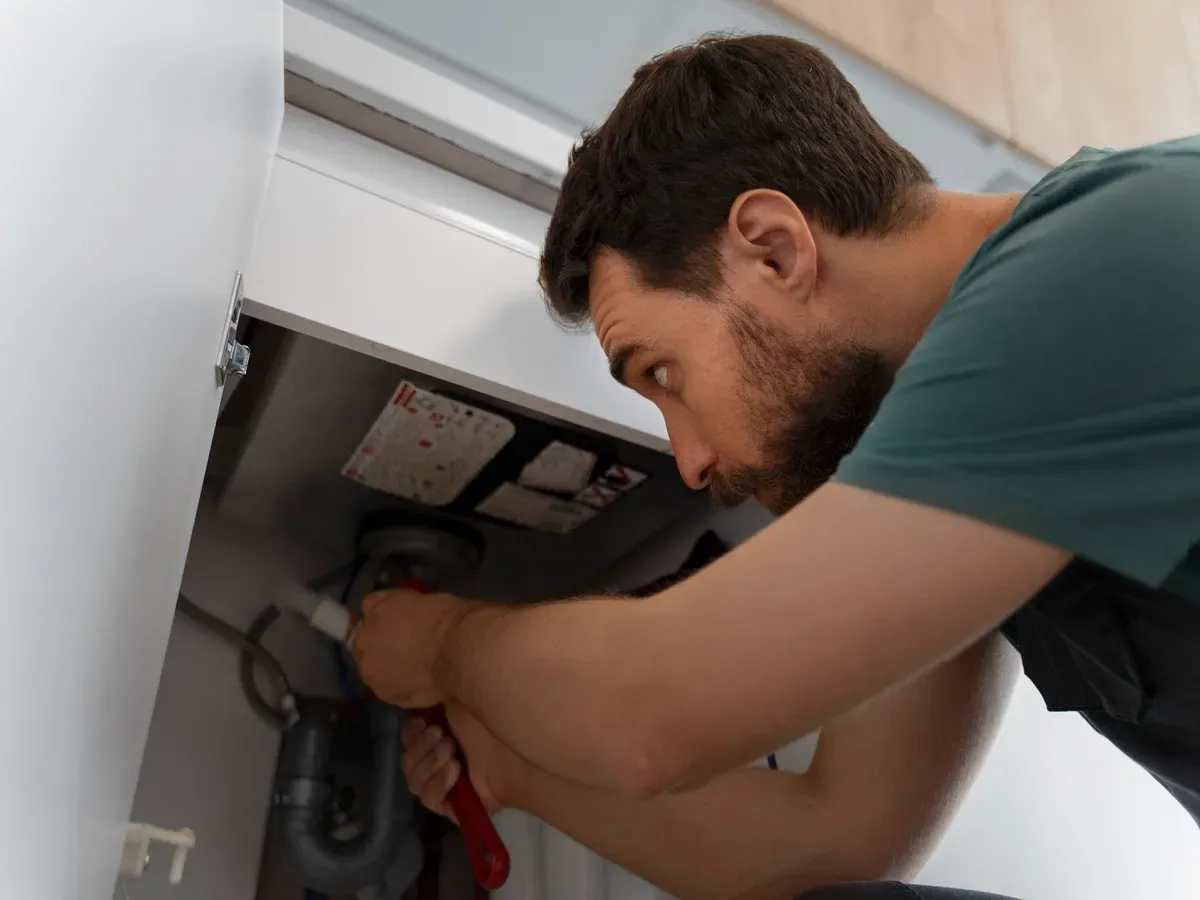
If your Castle Rock water heater just stopped working, you need to know fast: repair it or replace it? The wrong call costs you money either way — paying for repairs on a unit that's nearly done, or buying a new one when a simple fix would have worked.
This page gives you the exact thresholds most plumbers use to make that call. You'll see the age rules, the cost rules, the warning signs, and a few factors that are specific to Castle Rock homes.
When Should You Replace a Water Heater Instead of Repairing It?
Replace your water heater if:
- It is 10 years old or older — most tank heaters last 8–12 years
- The repair cost is more than 50% of what a new unit would cost
- You have had repeated repairs in the past 1–2 years
- There is rust-colored water or a visible leak at the tank
- It no longer heats efficiently even after service
If your heater is under 8 years old and the repair is minor — think thermostat, anode rod, or pilot light — repair usually makes sense. Castle Rock's hard water can shorten tank life, so a licensed local plumber can give you a more exact answer after a quick look.
How Old Is Your Water Heater? Start Here
Age is the fastest filter you have. Most tank water heaters last 8–12 years. Tankless units typically run 15–20 years with proper maintenance. If you don't know how old yours is, check the serial number on the label — most manufacturers encode the year in the first few characters.
| Heater Age | Recommendation |
|---|---|
| Under 8 years | Lean toward repair - unit has useful life left |
| 8-10 years | Evaluate based on repair cost and symptoms |
| 10+ years | Lean toward replacement - end of typical lifespan |
| 15+ years (tank) | Replace - running past expected service life |
Castle Rock's water comes from the Denver Basin aquifer and carries high mineral content. That hardness causes sediment buildup inside the tank, which can age a unit faster than the national average. In our Castle Rock service calls, we often see heaters fail 1–2 years early because of hard water buildup that went unflushed.
The 50% Rule — When Repair Costs Too Much
Once you know the age, look at the cost. The 50% rule is simple: if the repair costs more than half what a new unit would cost, replace it. It's a widely used guideline among plumbers and consumer advocates alike.
Common repairs and typical cost ranges:
- Thermostat or heating element replacement — $150–$300 — usually worth it
- Anode rod replacement — $150–$250 — worth it on a younger unit
- Pilot light / igniter repair — $100–$200 — worth it on most units
- Pressure relief valve — $150–$300 — depends on age
- Sediment flush — $80–$200 — preventive, almost always worth it
For reference, a new tank water heater installed in the Castle Rock area typically runs $800–$1,800 depending on size and efficiency. A new tankless unit runs higher. If a repair quote is approaching $900–$1,000 on a 10-year-old tank, replacement is the smarter call.
Not sure what your repair will cost? Learn More from our water heater guide for local homeowners
| Repair | Replumb | |
|---|---|---|
| Scope | Fixes one section or leak | Replaces all or most pipe runs |
| Cost | Lower upfront | Higher upfront, lower long-term |
| Best for | Isolated, recent problem | Recurring issues, aging pipes |
| Timeline | Hours to 1 day | 2-4 days |
| Permits needed | Usually no | Yes, in most cases |
Warning Signs Your Water Heater Is Done
The numbers help, but sometimes your heater tells you directly. Here are five symptoms that usually mean replacement is coming — if not now, then soon.
- Rust-colored or discolored hot water — Rust inside the tank means internal corrosion. Once it starts, it doesn't stop.
- Rumbling or popping sounds — Sediment hardens at the bottom of the tank over time. That noise is the burner working harder to heat through it.
- Water pooling around the base — A leak at the tank itself almost always means the tank has cracked or failed. Repair is rarely an option at that point.
- Inconsistent water temperature — If you're adjusting the thermostat more often and still getting cold water, the unit is struggling.
- Unexplained spike in your energy bill — A failing heater works harder to do the same job, and your utility bill will show it.
On a recent Castle Rock call, a homeowner had been adjusting their thermostat for months trying to get consistent hot water. The tank had failed internally. A quick inspection prevented what could have been a much larger water damage problem.
Repair vs. Replace Decision Chart
No single factor decides this. It's the combination that tells the story. Use this chart as a starting point, then call a plumber for anything in the gray zone.
| Factor | Lean Repair | Lean Replace |
|---|---|---|
| Age | Under 8 years | 10+ years |
| Repair cost | Under 50% of new unit | Over 50% of new unit |
| Symptoms | Minor, single issue | Multiple or worsening |
| Efficiency | Heating well, bills stable | Rising bills, inconsistent heat |
| Repair history | First repair needed | Repaired 2+ times recently |
If most of your answers fall in the right column, replacement is likely the better investment. If they mostly fall left, a repair call makes sense.
Castle Rock Factors That Affect Your Decision
Generic water heater guides don't account for where you live. Castle Rock has a few conditions that matter when you're making this call.
3 Castle Rock-Specific Factors That Shorten Water Heater Life:
- Hard water from the Denver Basin aquifer — High mineral content creates sediment buildup that strains the tank and heating elements faster than in softer-water areas. Annual flushing helps, but many homeowners skip it.
- Altitude over 6,200 feet — At this elevation, gas appliances burn less efficiently due to thinner air. Gas water heaters here may need altitude adjustments to meet manufacturer specs, which affects long-term output and wear.
- Energy rates and the tankless payback window — If you're already looking at a replacement, Castle Rock homeowners on Xcel Energy or Black Hills Energy may find that a tankless upgrade pays off within 5–8 years through energy savings, given how hard tank units work at altitude with hard water.
We've serviced hundreds of homes across Castle Rock — the neighborhoods around Terrain and The Meadows tend to have older units that need more frequent sediment flushing due to the area's water profile. If you're in one of those areas and your heater is over 8 years old, it's worth a quick inspection before a problem forces the decision.
What to Do Next — Get a Real Answer Fast
A decision chart gets you close. A 10-minute inspection gets you there. Seeing the unit in person — the age, the condition, the sediment level, the signs of stress — tells a plumber things no chart can.
Castle Rock Plumbing serves homes and businesses throughout Castle Rock, CO. We handle water heater repair in Castle Rock and full replacements, including tankless installations. We give you a straight answer before any work starts.
Before you call, have this ready:
- The age of your unit (check the serial number label)
- The symptoms you're seeing — sounds, leaks, temperature issues
- Your most recent energy bill if costs have gone up unexpectedly
Call Castle Rock Plumbing — We'll Tell You Exactly What You Need.
📞 (970) 703-0305 📍 785 Park St, Castle Rock, CO 80109
Call our Castle Rock plumbers