
How Long Does a Water Heater Typically Last? (Castle Rock Homeowners' Guide)
Introduction
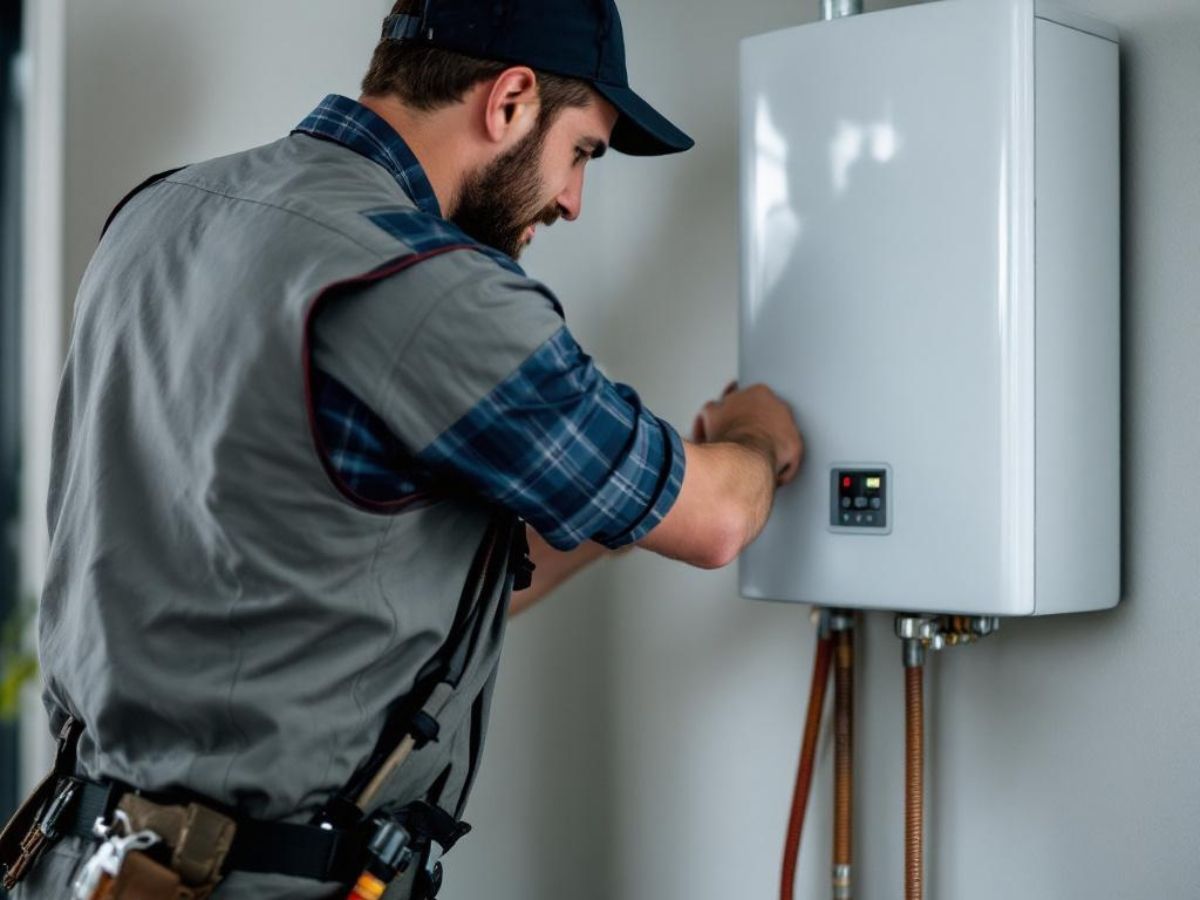
Your water heater works quietly every single day — until it doesn't. Most homeowners in Castle Rock, CO don't think about it until there's cold water or a puddle on the floor. So how long does a water heater typically last, and how close is yours to the end of the line?
Knowing your water heater's age and warning signs gives you a real head start. A surprise breakdown always costs more — in money, time, and stress — than a planned replacement.
This guide answers how long a water heater typically lasts, breaks down the difference between tank and tankless units, and tells you what to watch for before things go wrong. We'll cover average lifespans by type, the top warning signs of a failing unit, how to check your heater's age, and when it's time to call for water heater replacement in Castle Rock.
How Long Does a Water Heater Typically Last?
A standard tank water heater typically lasts 8–12 years. A tankless water heater can last 20 years or more with proper maintenance. Lifespan depends on water quality, usage, and upkeep. If your unit is past the 10-year mark and showing signs of rust, leaks, or inconsistent hot water, it's time to consider
water heater replacement in Castle Rock.
Tank vs. Tankless: How Long Does Each Type Last?
Not all water heaters age the same way. The type you have matters a lot when it comes to how many years you can expect.
| Type | Average Lifespan | Key Factor |
|---|---|---|
| Tank Water Heater | 8–12 years | Sediment buildup, anode rod condition |
| Tankless Water Heater | 15–20+ years | Mineral scale on heat exchanger |
Tank units store hot water constantly. That ongoing cycle of heating and sitting leads to sediment buildup and corrosion over time. Tankless units heat water on demand, so there's no standing water to corrode the interior — that's the main reason they last longer.
Brand, installation quality, and water hardness all affect how long either type lasts. In the Castle Rock area, Douglas County water is moderately hard. That mineral content puts extra strain on tank units, and we often see them fail closer to the 9–10 year mark than the 12-year end of the range.
Warning Signs Your Water Heater Is Failing
Knowing how long a water heater should last is one thing. Knowing when yours is actually struggling is what gives you time to plan.
| Warning Sign | What It Means |
|---|---|
| Rusty or discolored hot water | Internal tank corrosion — the tank may be deteriorating |
| Rumbling, popping, or banging sounds | Sediment has hardened on the heating elements |
| Water pooling around the base | Tank wall may have a fracture or the pressure valve is leaking |
| Inconsistent hot water or longer heat-up times | Heating elements or burner are losing efficiency |
| Unit is 10+ years old and has never been serviced | High risk of sudden failure |
In our experience, rumbling or banging sounds are the most commonly ignored warning sign. Homeowners often mistake it for normal operation. By the time water appears on the floor, the problem is usually well advanced.
If you're seeing any of these signs, don't wait for a full failure. Professional water heater replacement on your schedule is far less disruptive than an emergency on the water heater's schedule.
How to Find Out How Old Your Water Heater Is
If you're not sure when your unit was installed, the serial number can tell you. Here's how to find it:
1. Locate the rating plate. It's usually a sticker on the upper portion of the tank.
2. Find the serial number. It's a string of letters and numbers — typically 8–10 characters.
3. Decode the manufacture year. Each manufacturer uses a different format. Bradford White, Rheem, and A.O. Smith all encode the year differently — often in the first one or two characters.
4. Use an online decoder. Search for your brand name plus "serial number date decoder" to find the right guide for your unit.
5. Can't read the label? If the sticker is worn or missing, give us a call. We can identify the unit's age during a quick inspection at your Castle Rock home.
Knowing the manufacture year — not the install year — gives you the most accurate picture of where your unit stands.
Does Maintenance Make a Difference?
Yes — but only up to a point. Good maintenance habits can add real years to a tank water heater's life. Here's what actually moves the needle:
• Anode rod inspection (annually): The anode rod protects the tank from corrosion. When it's depleted, the tank corrodes instead. Replacing it on time can add 2–4 years to the unit's life.
• Sediment flush (annually): Mineral deposits settle at the bottom of the tank and force the heating elements to work harder. Flushing them out once a year reduces strain and improves efficiency.
• Temperature setting: Keep the thermostat at 120°F. It's efficient, it's protective, and it reduces stress on the tank.
• Pressure relief valve test: A quick annual test confirms the valve works. A stuck valve is a safety issue, not just a maintenance issue.
When we do annual maintenance visits in Castle Rock, flushing sediment is the task most homeowners have never done — even on units that are already 8 or 9 years old.
One important thing to keep in mind: maintenance extends life, but it doesn't prevent replacement. Even a well-maintained unit has a ceiling. When repair costs start adding up, that's usually the signal that replacement makes more sense
When It's Time to Replace — What to Do Next in Castle Rock
Here's a simple rule of thumb: if your unit is 10 years or older and showing any of the warning signs above, replace it — don't repair it. Repairs on aging units tend to be short-lived, and you'll likely be back in the same conversation within a year or two.
Repair vs. replace: A single repair on an older unit can run several hundred dollars. A new tank water heater gives you 8–12 fresh years. A tankless upgrade gives you 20+ years and lower energy costs. When you frame it that way, replacement usually wins.
Replacement is also a good time to upgrade. If you've been dealing with running out of hot water, or your energy bills feel high, switching to a tankless unit at replacement time is a smart move. You only pay for installation once.
What to expect from a replacement appointment with us:
• We'll assess your current setup and recommend the right unit for your home's size and usage
• Installation is typically completed in one visit
• We'll remove and dispose of the old unit
• We'll walk you through the new system before we leave
Local experience matters here. Castle Rock's moderately hard water affects equipment sizing and maintenance recommendations. A plumber who knows Douglas County's water conditions will set up your new unit to handle it — a big-box contractor often won't.
Schedule your water heater replacement in Castle Rock with Castle Rock Plumbing. We're at 785 Park St, Castle Rock, CO 80109, and you can reach us at (970) 703-0305.