
When Should You Replace Your Water Heater in Castle Rock?
When Should You Replace Your Water Heater in Castle Rock?
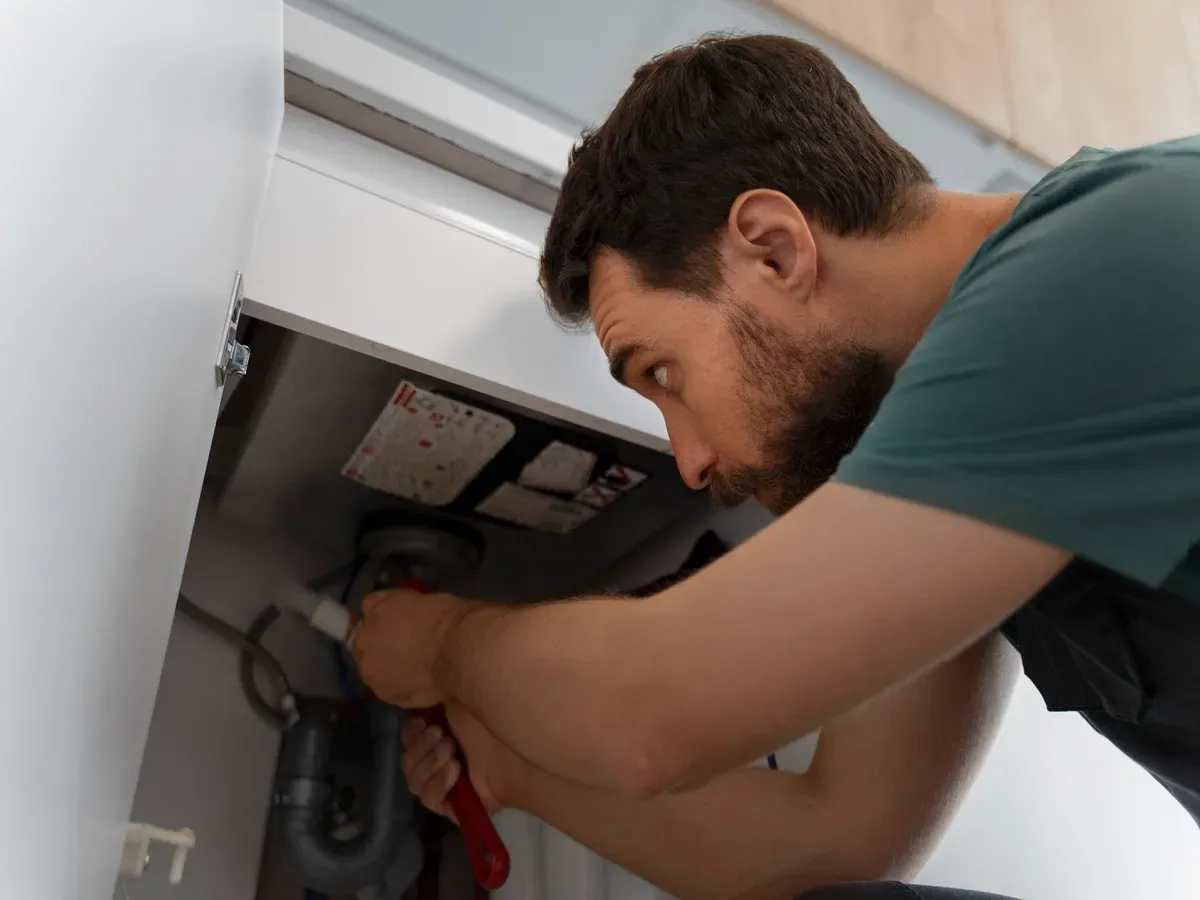
Your water heater is one of those household appliances you rarely think about - until the morning you step into an ice-cold shower or notice water pooling around the base of the tank. For Castle Rock homeowners, knowing when to replace your water heater rather than repair it can save thousands of dollars in emergency costs, water damage, and ongoing energy waste.
Castle Rock's unique conditions - hard water from local sources, high altitude affecting gas appliance efficiency, and temperature extremes that stress water heaters year-round - create specific challenges that affect water heater lifespan. A unit that might last 12-15 years in ideal conditions often needs replacement at 8-10 years in Castle Rock.
This comprehensive guide explains exactly when water heater replacement makes sense versus continued repairs, what signs indicate your unit is failing, how Castle Rock conditions affect water heater longevity, and what to expect during the replacement process. Whether your water heater is showing its age or you're proactively planning for eventual replacement, you'll find the information you need to make smart decisions.
How Long Do Water Heaters Last in Castle Rock?
Water heater lifespan varies significantly based on type, quality, maintenance, and local water conditions. Understanding expected lifespans helps you plan for replacement before catastrophic failure.
Standard Tank Water Heaters
National average lifespan: 10-12 years with proper maintenance
Castle Rock realistic lifespan: 8-10 years typically
Factors affecting lifespan in Castle Rock:
- Hard water mineral content accelerates tank corrosion
- Temperature extremes (hot summers, freezing winters) stress tanks
- Altitude (6,200 feet) affects gas water heater efficiency and combustion
- Sediment accumulation happens faster with mineral-rich water
By water heater type:
- Gas tank water heaters: 8-10 years in Castle Rock
- Electric tank water heaters: 8-12 years in Castle Rock
- High-efficiency tanks: 10-12 years with maintenance
Tankless Water Heaters
National average lifespan: 15-20 years with proper maintenance
Castle Rock realistic lifespan: 15-18 years typically
Why tankless lasts longer:
- No tank to corrode and fail
- Less sediment accumulation affecting components
- Easier to maintain and service
- Better suited to hard water conditions with proper care
Maintenance requirements:
- Annual descaling essential in Castle Rock's hard water
- Burner cleaning every 2-3 years for gas models
- Filter cleaning as needed
- Professional inspection annually
Heat Pump Water Heaters
National average lifespan: 10-15 years
Castle Rock considerations:
- Similar lifespan to standard electric tanks (10-12 years)
- Hard water affects heat pump components
- Colorado's dry climate beneficial for heat pump operation
- Require more maintenance than standard tanks
Factors That Extend or Shorten Lifespan
What extends water heater life:
- Annual tank flushing to remove sediment
- Anode rod replacement every 3-5 years
- Water softener installation reducing mineral buildup
- Proper temperature settings (120°F optimal)
- Professional maintenance and inspection
- Quality installation following code requirements
What shortens water heater life:
- Never flushing sediment from tank
- Neglecting anode rod replacement
- Extremely hard water without treatment
- Temperature set too high (accelerates corrosion)
- Poor installation or improper venting
- No expansion tank when required by code
For Castle Rock homes with hard water and older water heaters (8+ years), proactive planning for replacement makes more sense than waiting for failure.
Signs Your Water Heater Needs Replacement
Recognizing replacement indicators helps you replace your water heater on your schedule rather than during an emergency. Watch for these warning signs:
Age-Related Replacement Signals
Your water heater is 8+ years old: Even if functioning, units approaching the end of expected lifespan should be monitored closely. In Castle Rock's conditions, 8-year-old water heaters are statistically likely to fail within 1-3 years.
Finding your water heater's age:
- Check the serial number on manufacturer's label
- First letter/number often indicates manufacturing date
- Search "[brand name] serial number decoder" online
- Castle Rock building permits may indicate installation date
If you don't know the age: Assume replacement is prudent if you've lived in the home 8+ years without replacement or if previous owners couldn't provide installation date.
Physical Deterioration Signs
Rust-colored hot water (cold water is clear): Brown or rust-colored water from hot taps only indicates tank interior corrosion. Once the tank corrodes, it can't be repaired - only replaced. This symptom means replacement should happen within months before the tank leaks or bursts.
Visible tank corrosion or rust: Rust on the tank exterior, especially near connections or on the tank top, indicates advanced corrosion. The tank is failing and replacement is imminent.
Water pooling around the base: Any water around your water heater's base requires immediate investigation. Small leaks worsen rapidly. Tank leaks can't be repaired - only replacement resolves them.
Moisture or rust on connections: Corrosion at pipe connections, pressure relief valve, or drain valve may indicate repairable issues, but often signals overall tank deterioration.
Performance Decline Indicators
Inconsistent water temperature: If your hot water fluctuates between scalding and lukewarm during use, heating elements (electric) or thermostat systems (gas/electric) are failing. In older units (8+ years), replacement often makes more sense than repairs.
Not enough hot water: When hot water runs out faster than it used to - single shower exhausts the tank, dishwasher doesn't get hot water, laundry requires multiple cycles - your water heater is losing capacity. This happens as sediment fills the tank, reducing available space for hot water.
Water takes longer to heat: If recovery time (time between hot water uses) has increased noticeably, your heating elements or burner efficiency has declined significantly.
Unusual noises: Loud rumbling, popping, or banging sounds during heating indicate heavy sediment buildup on the tank bottom. While flushing sometimes helps, in older Castle Rock water heaters this often signals the unit is near end-of-life.
Recurring Problems
Multiple repairs in 12-18 months: If you've replaced heating elements, thermostats, pressure relief valves, or other components multiple times recently, the entire unit is deteriorating. Continued repairs on an aging unit rarely makes financial sense.
Repairs approach 50% of replacement cost: When a repair estimate reaches half of what new water heater installation would cost, replacement provides better value - especially for units over 8 years old.
Decreasing time between repairs: If repairs are needed more frequently (annually, then every 6 months, then quarterly), the cascade failure of an aging unit is underway. Replacement prevents the eventual catastrophic failure.
Energy Bill Increases
Rising energy costs without usage changes: If your gas or electric bills have increased significantly but your hot water usage hasn't changed, your water heater is losing efficiency. Older units work harder and longer to heat water, consuming more energy for the same output.
Comparison to neighbors: Castle Rock neighbors with similar homes and similar household sizes should have comparable water heating costs.
Significantly higher bills suggest your unit is inefficient.
These signs often appear together. One or two symptoms might justify monitoring; three or more typically indicate replacement is the right choice.
Repair vs. Replacement Decision Framework
Deciding between
water heater repair and replacement requires considering multiple factors beyond immediate cost.
The 50% Rule Explained
Many professional plumbers follow this guideline:
If repair cost exceeds 50% of replacement cost AND the unit is past 50% of its expected lifespan, choose replacement.
Example scenario 1:
- Water heater age: 9 years (past 50% of 10-12 year lifespan)
- Repair estimate: $450 (heating element and thermostat)
- New water heater installed: $1,800
- Repair is 25% of replacement cost
- Decision: Could repair, BUT at 9 years old, another failure likely within 1-2 years - replacement often wiser
Example scenario 2:
- Water heater age: 5 years
- Repair estimate: $300 (thermostat replacement)
- New water heater installed: $1,800
- Repair is 17% of replacement cost, unit halfway through lifespan
- Decision: Repair makes sense - still years of life remaining
Example scenario 3:
- Water heater age: 11 years
- Repair estimate: $600 (heating elements and anode rod)
- New water heater installed: $1,800
- Repair is 33% of replacement cost, BUT unit is 11 years old
- Decision: Replace - unit is living on borrowed time
Age as Primary Factor
Age-based recommendations for Castle Rock water heaters:
Under 6 years old:
- Almost always repair unless catastrophic failure
- Repairs typically extend life significantly
- Unit still has substantial remaining lifespan
6-8 years old:
- Repair for minor issues (under $400)
- Consider replacement for major repairs (over $500)
- Factor in maintenance history and water quality
8-10 years old:
- Replacement usually preferred unless repair is very minor (under $250)
- Risk of additional failures within 1-2 years is high
- Energy efficiency gains from new unit factor in decision
Over 10 years old:
- Strong recommendation for replacement regardless of repair cost
- Catastrophic failure risk increases substantially
- New unit provides reliability, efficiency, and warranty protection
Financial Analysis Beyond Repair Cost
Consider total cost over next 3-5 years:
Repair-and-hope scenario (9-year-old unit):
- Repair today: $450
- Likely additional repair in 18 months: $350
- Likely replacement in 3 years: $1,800
- Total 3-year cost: $2,600
Replace-now scenario:
- Replacement today: $1,800
- No repairs for 8-10 years
- Energy savings: $100-150/year (older units are inefficient)
- Total 3-year cost: $1,800 minus $300-450 energy savings = $1,350-1,500 net
In this example, replacement actually costs less over 3 years while providing a brand new unit with warranty coverage.
Home Sale Considerations
Planning to sell within 2-3 years?
Old water heaters create problems during home sales:
- Buyers request replacement before closing
- Buyers negotiate price reductions ($1,500-2,000 typically)
- Home inspectors flag old water heaters as concerns
- Risk-averse buyers may walk away entirely
Proactive replacement before listing:
- Eliminates negotiation leverage for buyers
- "New water heater 2025" becomes selling point
- Faster, smoother closing process
- Often recovers 60-80% of replacement cost in sale price
For Castle Rock's competitive real estate market, homes with updated mechanicals sell faster and for higher prices.
When Repair Makes Sense
Choose repair when:
- Unit is under 6 years old
- First major repair needed on this unit
- Repair cost is under $400
- Rest of the system appears healthy per inspection
- You're staying in the home long-term and can budget for eventual replacement
When Replacement Makes Sense
Choosewater heater replacement when:
- Unit is 8+ years old
- Multiple repairs needed or recent repair history
- Repair costs approach $500+
- Tank shows rust, corrosion, or leaking
- You want improved efficiency and lower energy bills
- Planning to sell home within 3 years
- Current unit is undersized for household needs
How Castle Rock Conditions Affect Water Heater Lifespan
Castle Rock's location and local conditions create unique challenges for water heaters that homeowners should understand.
Hard Water Impact
Douglas County water characteristics: Castle Rock receives water from Douglas County water utilities and local wells, known for moderate to high mineral content - primarily calcium and magnesium.
How hard water shortens water heater life:
Sediment accumulation: Minerals precipitate out when water is heated, forming sediment that settles on tank bottoms. This sediment layer:
- Insulates water from heating elements, forcing longer heating cycles
- Creates hot spots that accelerate tank corrosion
- Reduces tank capacity (less room for hot water)
- Causes rumbling, popping noises during heating
Accelerated corrosion: Minerals in hard water accelerate electrochemical corrosion of tank interiors. Anode rods - designed to corrode instead of tanks - deplete faster in hard water, leaving tanks vulnerable.
Component failures: Hard water causes:
- Heating element mineral buildup and premature failure
- Valve scaling and leaking
- Dip tube deterioration
- Thermostat malfunction from mineral deposits
Mitigation strategies:
- Annual tank flushing removes sediment before it hardens
- Water softener installation dramatically extends water heater life
- Anode rod replacement every 3-5 years maintains tank protection
- Setting temperature to 120°F reduces mineral precipitation
Altitude Effects on Gas Water Heaters
Castle Rock elevation: 6,200 feet above sea level
Impact on gas water heaters: At high altitude, thinner air contains less oxygen, affecting gas appliance combustion:
Efficiency reduction: Gas water heaters lose approximately 4% efficiency per 1,000 feet of elevation above sea level. At Castle Rock's altitude, that's roughly 20-25% efficiency loss compared to sea-level operation if not properly adjusted.
Installation requirements:
- Gas appliances must be de-rated for altitude
- Burner orifices may need adjustment or replacement
- Proper venting becomes even more critical
- Professional installation ensuring high-altitude compensation is essential
Symptoms of improper altitude adjustment:
- Yellow or sooty flames (should be blue)
- Carbon monoxide production
- Pilot lights that won't stay lit
- Reduced heating capacity
All gas water heaters installed in Castle Rock must be adjusted for high-altitude operation. Proper adjustment maintains efficiency and safety.
Temperature Extremes
Castle Rock climate challenges:
Winter effects:
- Ambient temperatures drop well below freezing
- Water heaters in garages, crawl spaces, or exterior walls work harder
- Incoming water temperature drops significantly (harder to heat)
- Freeze risk for pipes connected to water heaters
Summer effects:
- High temperatures in attics or garages where water heaters are located
- Increased cycling as hot water demand rises
- Greater temperature differential to overcome
Year-round stress: Temperature swings of 60-80°F between summer highs and winter lows stress water heater components through constant expansion and contraction.
Clay Soil and Foundation Movement
Castle Rock's expansive clay soil: Foundation movement from soil expansion/contraction can stress water heater connections:
- Pipe connections crack or separate
- Gas lines develop leaks
- Water supply lines leak
- Improper slope develops in drain pans
Regular inspection of connections prevents small issues from becoming major failures
Types of Water Heaters for Castle Rock Homes
When replacing your water heater, several options suit different household needs and budgets.
Traditional Tank Water Heaters
Gas tank water heaters:
- Capacity: 30-75 gallons typical for residential
- Fuel: Natural gas (common in Castle Rock)
- Installed cost: $1,200-$2,200
- Lifespan: 8-10 years in Castle Rock
- Pros: Lower operating costs than electric, fast recovery, works during power outages
- Cons: Requires venting, altitude adjustment needed, less efficient than tankless
- Best for: Most Castle Rock homes, budget-conscious replacement
Electric tank water heaters:
- Capacity: 30-80 gallons typical
- Fuel: Electricity
- Installed cost: $1,000-$1,800
- Lifespan: 8-12 years in Castle Rock
- Pros: Lower upfront cost, no venting required, easier installation
- Cons: Higher operating costs, doesn't work during power outages, slower recovery
- Best for: Homes without gas service, smaller households
High-efficiency tank models:
- Better insulation (R-16 to R-24+)
- Improved heat retention
- Energy Factor 0.67-0.80
- Added cost: $200-400 over standard tanks
- Energy savings: $80-150/year typically
Tankless Water Heaters
Gas tankless:
- Endless hot water on demand
- Installed cost: $2,500-$4,500
- Lifespan: 15-20 years
- Energy Factor: 0.82-0.96
- Pros: 20-30% energy savings, long lifespan, space-saving, endless hot water
- Cons: Higher upfront cost, requires gas line sizing verification, annual maintenance
- Best for: Large families, high hot water demand, long-term homeowners
Electric tankless:
- Installed cost: $1,800-$3,500
- Requires significant electrical upgrade often
- Less common in Castle Rock (high electric rates make gas more economical)
Learn more about tankless water heater installation in Castle Rock.
Heat Pump Water Heaters
Hybrid electric:
- Uses heat pump technology plus electric resistance backup
- Installed cost: $2,500-$4,000
- Energy Factor: 3.0-3.5 (most efficient electric option)
- Pros: 50-60% energy savings vs. standard electric, eligible for rebates
- Cons: Higher upfront cost, requires adequate space, produces cool air, needs maintenance
- Best for: Homes without gas service wanting efficiency, mild climate locations
Solar Water Heaters
Active solar systems:
- Installed cost: $5,000-$10,000+
- Requires backup conventional system
- Colorado's 300+ sunny days annually beneficial
- Federal and state incentives available
- Best for: Environmentally focused homeowners, long-term residents
-
For most Castle Rock homeowners, gas tank or tankless water heaters provide the best combination of performance, cost, and reliability.
The Water Heater Replacement Process
Understanding what happens during water heater installation helps you prepare and know what to expect.
Step 1: Assessment and Selection
Professional evaluation includes:
- Current water heater age, type, and capacity
- Household size and hot water usage patterns
- Available fuel types (gas, electric)
- Location and space constraints
- Budget considerations
- Energy efficiency goals
Sizing recommendations:
- 2 people: 30-40 gallon tank or 5-7 GPM tankless
- 3-4 people: 40-50 gallon tank or 7-9 GPM tankless
- 5+ people: 50-80 gallon tank or 9-11 GPM tankless
Proper sizing ensures adequate hot water without oversizing and wasting energy.
Step 2: Permitting and Preparation
Before installation:
- Pull necessary Castle Rock building permits ($50-150 typically)
- Order selected water heater unit
- Schedule installation date
- Verify access to installation location
- Prepare work area (clear around old unit)
Professional plumbers handle permitting and ensure code compliance.
Step 3: Old Unit Removal
Removal process:
- Shut off water, gas/electric supply
- Drain old water heater completely
- Disconnect all connections (water, gas, electric, venting)
- Safely remove old unit
- Dispose of old unit properly (recycling when possible)
Removal typically takes 1-2 hours depending on accessibility.
Step 4: New Unit Installation
Installation includes:
- Position new water heater properly
- Install new drain pan (required by code)
- Connect cold water inlet and hot water outlet
- Install temperature/pressure relief valve
- Connect gas line or electrical wiring
- Install proper venting (gas units) or electrical upgrades (electric units)
- Add expansion tank if required by code
- Install seismic straps per Castle Rock building code
High-altitude adjustments (gas units): Professional installers ensure gas water heaters are properly adjusted for Castle Rock's 6,200-foot elevation, maintaining efficiency and safety.
Step 5: Testing and Inspection
Before finishing:
- Fill tank and test all connections for leaks
- Light pilot and verify proper burner operation (gas)
- Test heating elements and thermostats (electric)
- Verify proper venting draft (gas)
- Set temperature to optimal 120°F
- Test pressure relief valve operation
- Check all safety features
Municipal inspection: Many Castle Rock installations require final inspection by city inspector to verify code compliance.
Step 6: Cleanup and Documentation
Professional service includes:
- Cleanup of work area
- Removal of all debris and packaging
- Explanation of new unit operation
- Maintenance recommendations
- Warranty registration
- Written documentation of work performed
Total installation time: 3-5 hours for straightforward replacements; longer if significant modifications needed.
Choosing the Right Water Heater for Your Home
Selecting the best replacement water heater involves balancing initial cost, operating costs, capacity needs, and long-term value.
Key Decision Factors
Household size and usage:
- Large families: Tankless or large-capacity tanks
- Couples/small families: 40-50 gallon tanks sufficient
- High simultaneous demand: Tankless best choice
Available fuel types:
- Natural gas available: Gas units typically most economical
- Electric only: Consider heat pump for efficiency
- Both available: Gas usually preferred for lower operating costs
Budget considerations:
- Tight budget: Standard gas or electric tank
- Moderate budget: High-efficiency tank
- Long-term investment: Tankless or heat pump
Energy efficiency priorities:
- Maximum efficiency: Tankless gas or heat pump electric
- Good efficiency: High-efficiency tanks
- Standard efficiency: Basic tanks (lowest upfront cost)
Space constraints:
- Limited space: Tankless saves significant space
- Standard space: Any tank type works
- Cramped locations: May limit options
Castle Rock-Specific Recommendations
For most Castle Rock homes: High-efficiency gas tank water heaters (40-50 gallon) provide the best balance of upfront cost, operating efficiency, reliability, and lifespan for typical households.
For large families or high demand: Gas tankless water heaters deliver endless hot water and 20-30% energy savings, justifying higher upfront cost for long-term homeowners.
For homes without gas service: Heat pump water heaters offer dramatic efficiency improvements over standard electric tanks, with available rebates reducing cost difference.
For older homes being updated: Consider water heater replacement as part of larger efficiency upgrades to maximize available incentives and overall home performance.
Castle Rock Plumbing - Expert Water Heater Replacement for Castle Rock Homes